Garage Door Repair Cost in Hopkins MN (2026 Guide)
Your honest, no-fluff breakdown of what repairs actually cost — and how to avoid overpaying.
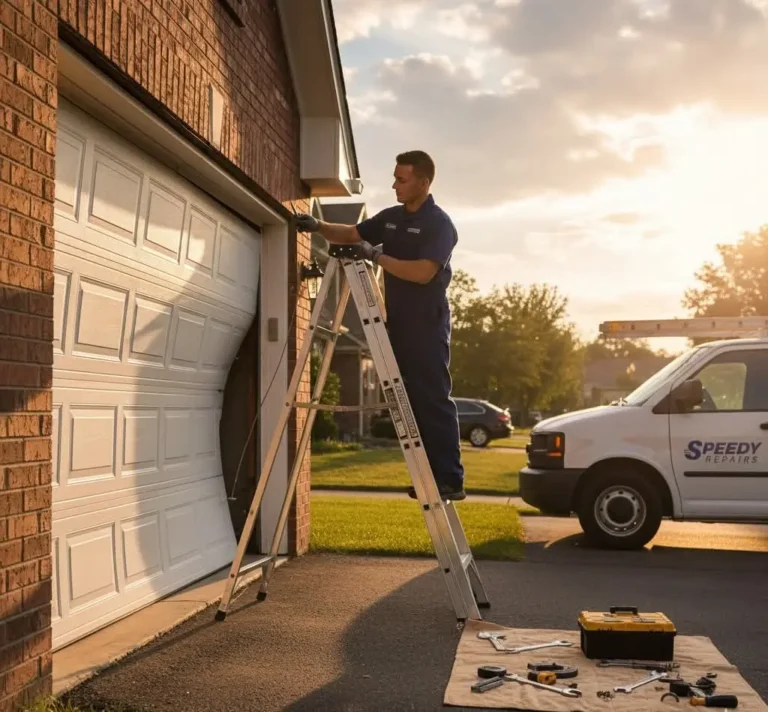
It was January 2024, and the temperature in Hopkins had dropped to minus fourteen. A homeowner on 8th Avenue South called me in a panic — her garage door had slammed shut and refused to budge. Her car was inside, she had a job interview in an hour, and the torsion spring above the door had snapped clean in two. I quoted her a fair repair: $185 for parts and labor. The company she called first? $420. Same job. Same parts. Same forty-minute fix.
That price gap is the reason this guide exists.
If you live in Hopkins, Minnetonka, or anywhere in the west metro, you need real numbers — not national averages that have nothing to do with Minnesota winters, Minnesota labor rates, or the specific wear patterns that come from opening a garage door in sub-zero temperatures two hundred times a year. This guide gives you exactly that.
What Does Garage Door Repair Cost in Hopkins MN in 2026?
Most homeowners in Hopkins pay between $150 and $350 for a standard garage door repair. That covers the most common jobs: spring replacement, cable repair, roller replacement, and off-track fixes. More complex repairs — panel replacement, opener motor failure, complete cable system overhaul — push that range to $350 to $650. Full door replacement, which occasionally makes more sense than repair, runs $900 to $2,800 installed.
Here is a quick-reference cost table based on current Hopkins and Hennepin County market pricing as of early 2026:
Repair Type | Average Cost (Hopkins MN) | Typical Time |
Torsion spring replacement (single) | $150 – $220 | 45 – 60 min |
Torsion spring replacement (double) | $200 – $300 | 60 – 90 min |
Broken cable replacement | $120 – $180 | 30 – 45 min |
Off-track door realignment | $100 – $175 | 30 – 60 min |
Roller replacement (set of 10) | $90 – $140 | 30 min |
Garage door opener repair | $100 – $250 | 45 – 90 min |
Panel replacement (one panel) | $250 – $400 | 1 – 2 hrs |
Full door replacement (installed) | $900 – $2,800 | Half day |
One thing most guides won’t tell you: these prices shift by 15 to 20 percent depending on the time of year. Spring and fall are peak season for garage door repairs in the Twin Cities. Companies are busy, and some stretch their margins. If your situation isn’t urgent, scheduling in late January or early August typically saves real money.
Why Do Garage Door Springs Break More Often in Minnesota?
This is the part that catches Hopkins homeowners off guard. Torsion springs are rated by cycle count — typically 10,000 to 20,000 cycles depending on the spring gauge. One cycle equals one open and one close. If you use your garage door four times a day, a 10,000-cycle spring lasts roughly seven years.
But cold weather is a spring killer. Metal contracts in extreme cold, and repeated thermal cycling — going from minus twenty outside to forty degrees inside the garage — stresses the metal beyond what manufacturers engineer for in moderate climates. I’ve replaced springs on two-year-old Hopkins homes that failed simply because the homeowner didn’t upgrade to a higher-gauge spring during install.
The Real Cost of Cheap Springs
Standard springs from a big-box store cost about $30 to $50 each. Professional-grade springs from distributors like Clopay or Wayne Dalton run $60 to $90 each but carry 20,000 to 25,000-cycle ratings. Over a ten-year ownership period in Minnesota, the math strongly favors the upgrade. Ask your technician specifically whether they’re installing standard or high-cycle springs. If they can’t answer without hesitation, that tells you something.
When Both Springs Need Replacing
If you have a two-spring system and one breaks, replace both. This is the honest advice that not every company gives because it doubles the parts revenue but genuinely serves the homeowner. The second spring has the same wear history as the first. If you replace only the broken one, you’re likely calling again in three to six months. I’ve seen this play out dozens of times in the south Hopkins area near Excelsior Boulevard.
What Does a Garage Door Cable Repair Cost?
Cables are the unsung workhorses of your door system. They run along the sides of the door, wind around drums, and translate spring tension into smooth vertical movement. When a cable snaps — and they do snap, especially if a spring has been failing and putting extra load on the cable — the door can drop suddenly or hang at an angle.
In Hopkins, cable replacement typically costs $120 to $180 including labor. The cables themselves cost $15 to $30. The rest is labor and, importantly, the expertise to tension them correctly. A cable installed at the wrong tension puts uneven load on the door tracks and accelerates wear on rollers and hinges.
One pattern I see regularly: homeowners try to replace cables themselves after watching a tutorial. Some succeed. But if the spring is even slightly out of tension, working with cables is genuinely dangerous. The spring stores enough energy to cause serious injury. This is one repair where I’d always recommend a professional, regardless of your DIY comfort level.
Garage Door Opener Repair vs. Replacement — Which Makes More Sense?
This is where homeowners in Hopkins most often get misled. An opener repair quote of $200 on a unit that’s twelve years old is often a bad deal. Why? Because the logic boards, capacitors, and drive systems in older openers become unreliable after a decade of Minnesota winters, and one repair rarely solves the underlying aging problem.
Here’s the threshold I use in practice: if the opener is under eight years old and the repair is under $150, fix it. If it’s over ten years old or the repair exceeds $200, seriously price out a replacement. A new LiftMaster 84501 (a strong mid-range choice I’ve installed across Hopkins and St. Louis Park) runs about $280 to $320 installed — quiet, reliable, and compatible with myQ smart home integration.
Brands Worth Knowing
Three brands dominate the reliable mid-to-upper market in this area: LiftMaster (owned by Chamberlain), Genie, and Craftsman. LiftMaster has the strongest dealer support network in Hennepin County — parts are readily available and most local techs know them well. Genie makes a solid product at a slightly lower price point. Craftsman, particularly the units sold through Sears before its decline, has become harder to source parts for as the brand’s footprint shrinks.
Avoid off-brand openers sold through marketplaces at deep discounts. The $99 opener sounds compelling until you can’t find a replacement logic board two years later.
How to Tell If Your Garage Door Needs a Full Replacement
Repair-vs.-replace is the question that matters most financially. Here are the situations where replacement makes more sense than continued repair:
- The door has significant structural damage — bent or dented panels that affect the seal and alignment.
- You’ve spent more than $500 on repairs in the past two years and the door still has chronic issues.
- The insulation value is poor and your garage is attached — energy loss through an uninsulated door adds real money to your heating bill in Minnesota winters.
- The door is a non-standard size requiring discontinued parts.
- You’re planning to sell the home within two to three years — a new door has one of the highest ROI improvements in home value, typically returning 85 to 95 percent of cost at sale.
A new steel 16×7 insulated door from a brand like Clopay or Amarr, installed by a Hopkins-area contractor, runs $1,100 to $1,800 depending on panel style and insulation rating. Custom wood or glass panel doors push well past $2,500. For most Hopkins homes, a mid-grade insulated steel door is the practical sweet spot.
How to Avoid Getting Overcharged for Garage Door Repair
Here’s the uncomfortable truth about the garage door industry: pricing transparency is low, most homeowners have no frame of reference, and a small segment of companies — particularly those that advertise heavily with low service-call fees — make their margins by inflating parts costs and recommending unnecessary repairs once they’re on-site.
These are the specific tactics to watch for:
- The “while I’m here” upsell — a technician points out additional worn parts that may genuinely need attention, or may not. Ask them to show you the wear and explain the failure timeline.
- Inflated parts markup — some companies charge three to four times wholesale for parts. Ask for the part number so you can verify the component. A standard torsion spring for a 150-pound door shouldn’t cost more than $90 to $110 as a parts charge.
- Emergency fee creep — legitimate emergency surcharges for truly off-hours calls are reasonable. A $75 to $100 after-hours fee is fair. Anything above that deserves scrutiny.
- Replacing instead of adjusting — sometimes a door just needs adjustment and lubrication, not new parts. A $50 to $80 tune-up resolves many issues that get quoted as $200+ repairs.
My practical advice: get at least two quotes for any repair over $200. Most reputable Hopkins-area companies will quote over the phone if you describe the issue clearly. If a company refuses to give even a range until they’re on-site and insists on a $75 diagnostic fee, look elsewhere.
Annual Maintenance: The $75 Investment That Saves You $500
I’ve maintained garage doors professionally for years and the single clearest pattern I’ve observed is this: homeowners who do annual maintenance spend dramatically less on repairs over time. The math is simple. A professional tune-up costs $60 to $90. It includes lubrication of all moving parts, spring tension check and adjustment, cable and pulley inspection, balance test, and opener force adjustment.
The doors that never get maintenance are the ones that show up as emergency calls on February mornings.
What to Lubricate and What to Avoid
Use a lithium-based spray lubricant — WD-40 Specialist White Lithium Grease or 3-IN-ONE Garage Door Lube are both solid choices available at any Twin Cities hardware store for under $10. Apply to hinges, rollers (except nylon rollers, which should stay dry), springs, and the tracks on the inside curve. Do not lubricate the tracks themselves. This is one of the most common DIY mistakes — lubricating the tracks makes them slippery and causes the rollers to slide rather than roll, which accelerates wear.
Frequently Asked Questions About Garage Door Repair in Hopkins MN
How long does a garage door spring last in Minnesota?
Standard springs last 7 to 10 years with typical use. In Minnesota’s climate, that often skews toward the lower end due to thermal stress. High-cycle springs rated at 20,000-plus cycles can extend that to 12 to 15 years.
Can I replace a garage door spring myself?
Technically yes, but it carries real risk. Torsion springs are under significant tension — enough to cause serious injury if a tool slips or the spring releases unexpectedly. Extension springs (the type on either side of the door) are somewhat safer to DIY but still require care. If you’re not experienced with the system, the labor cost of professional installation is worth it.
Why does my garage door open unevenly in cold weather?
Cold thickens lubrication, stiffens seals, and causes metal components to contract slightly. Uneven opening in winter usually signals either a spring that’s lost tension on one side, dried-out rollers, or a cable that’s slightly slack. A seasonal tune-up before November typically prevents this.
Is a $49 service call fee a red flag?
Not automatically — some companies use low service fees to compete for calls and make up margin on parts. The key is whether they disclose total repair costs before starting work. A $49 service fee followed by a $400 repair quote for a spring replacement that should cost $175 is the pattern to watch for.
How much does it cost to add insulation to an existing garage door?
DIY insulation kits for a standard 16×7 door run $60 to $100 and add an R-value of 4 to 8. Professional insulation panel upgrades or door replacements with factory insulation (R-12 to R-16) are the more effective option for attached garages in Minnesota’s climate.
What’s the difference between a torsion spring and an extension spring?
Torsion springs mount horizontally above the door and work by twisting. Extension springs run along the horizontal tracks on each side and work by stretching. Torsion spring systems are more balanced, safer, and more common on modern doors. Most homes in Hopkins built after 2000 have torsion systems.
Does homeowner’s insurance cover garage door repair?
Only if the damage is caused by a covered peril — vehicle impact, storm damage, or theft. Wear-and-tear failure, which covers most spring and cable breaks, is not covered. Check your policy if you’ve had impact damage, as many homeowners don’t think to file a claim.
Finding a Reliable Garage Door Company in Hopkins MN
The Hopkins and west metro area has several well-established companies that do honest work. When vetting any provider, look for these signals: a physical address in the area (not just a PO box), Google reviews that include specific job descriptions rather than generic praise, willingness to provide written quotes, and licensing information available on request. Minnesota doesn’t require a specific garage door contractor license, but reputable companies carry general contractor registration and liability insurance.
Word of mouth from neighbors in Hopkins, St. Louis Park, or Minnetonka is still one of the most reliable sourcing methods. The Nextdoor app for the Hopkins area regularly surfaces contractor recommendations from people who have firsthand recent experience — a far more reliable signal than paid directory listings.
Final Thoughts
Garage door repairs in Hopkins don’t have to be a mystery or an expensive surprise. The core knowledge is simple: know the going rates, get multiple quotes for larger jobs, invest in annual maintenance, and upgrade to high-cycle springs if you’re replacing springs in Minnesota’s climate. Most homeowners who feel they overpaid did so not because they were foolish but because they were in a stressful moment and had no frame of reference.
Now you have one.
If you’re facing a repair right now and want a second opinion on a quote you’ve received, the most useful thing you can do is describe the specific parts being replaced and compare the labor and parts costs separately. That transparency request alone often brings quotes back to reasonable territory.
What’s the repair issue you’re currently dealing with? Drop a comment or question — I read everything and answer specifically.
— Updated January 2026 | Hopkins, MN & Hennepin County